Storage follows the workflow
SQL Server brings together users, orders and billing; MongoDB holds product documents. Redis manages the cart and undo/redo, while Cassandra records session events.
Four engines. Distinct responsibilities.
Four persistence engines, distinct responsibilities and one Java console workflow.
SQL Server, MongoDB, Redis and Cassandra support catalog, cart, order and billing workflows. A local integration prototype with no web UI or REST API.
Assign each operation to an appropriate storage model and bring the workflows together in one application.
I worked on the application and its persistence integration, contributing to Cassandra session records and local-environment configuration.
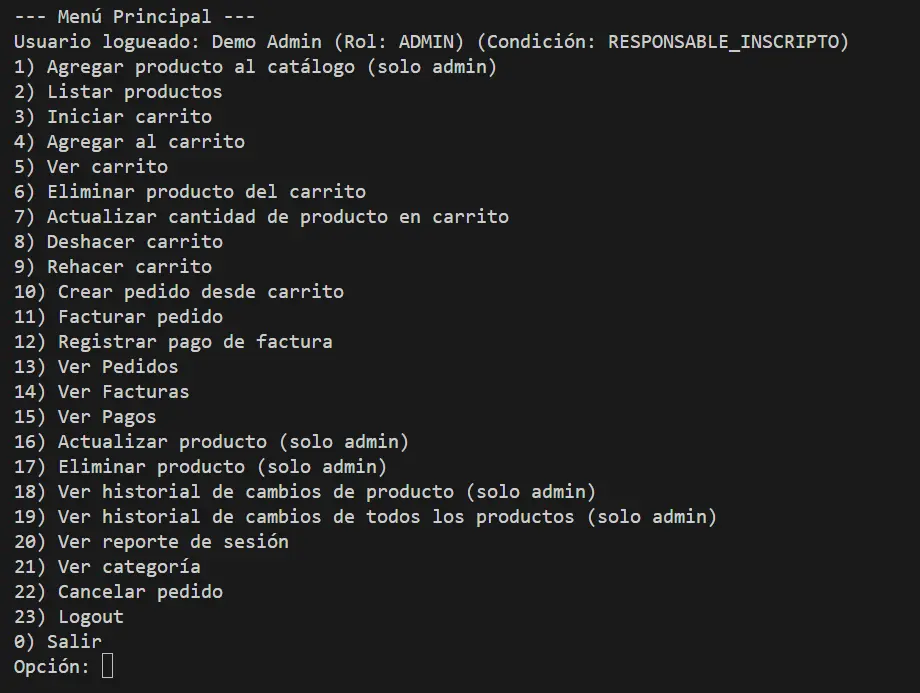
Console menu → business services → engine-specific DAOs. SQL Server stores users, orders and billing; MongoDB the catalog; Redis the cart and undo/redo; Cassandra session records. Docker Compose prepares the local environment.
SQL Server brings together users, orders and billing; MongoDB holds product documents. Redis manages the cart and undo/redo, while Cassandra records session events.
Services connect through DAOs specific to each engine. Integration runs in the local Docker Compose environment, without production-grade distributed transaction coordination.
Integration requires connections and initialization for four engines, and consistent login/logout records. The application does not implement production-grade distributed transaction coordination.
Console workflows using four engines with distinct roles, with fixes to session records and local-environment configuration.