History per profile
The name index and each profile’s data use separate AsyncStorage keys. Switching players gives access to their own history and preferences without a remote account.
Every answer counts.
Practice mental arithmetic through questions, timing and personal progress.
Three question formats, configurable difficulty and independent profiles in an Android application. History, rankings and preferences stay on the device.
Combine varied exercises with timing rules and clear feedback on accuracy, mistakes and response speed.
I developed the mobile application: game configuration and flow, local profiles, persistence, rankings, statistics, and audio and haptic feedback.
React Native screens and shared components use AppContext for profiles and state. TypeScript utilities separate question generation, scoring and storage; AsyncStorage keeps data per profile. Expo integrates audio, haptics and the Android project.
The name index and each profile’s data use separate AsyncStorage keys. Switching players gives access to their own history and preferences without a remote account.
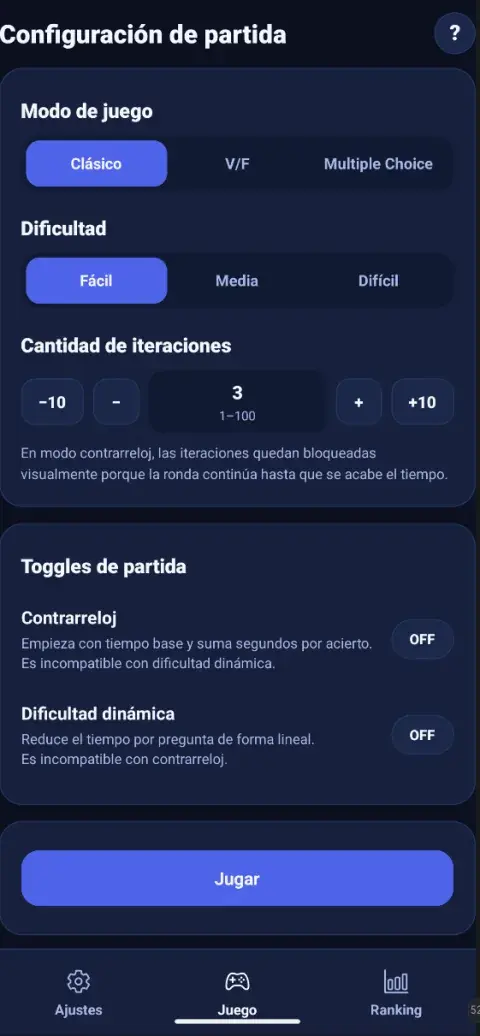
Time Attack adds or removes time according to the answer; Dynamic Difficulty progressively reduces each question’s limit. Configuration keeps these modes mutually exclusive, while scoring considers speed, accuracy and difficulty.
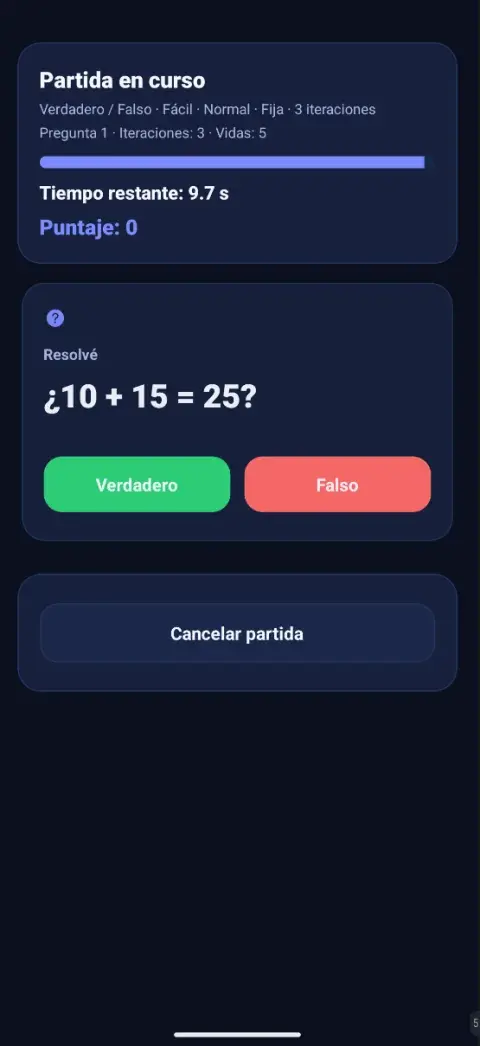
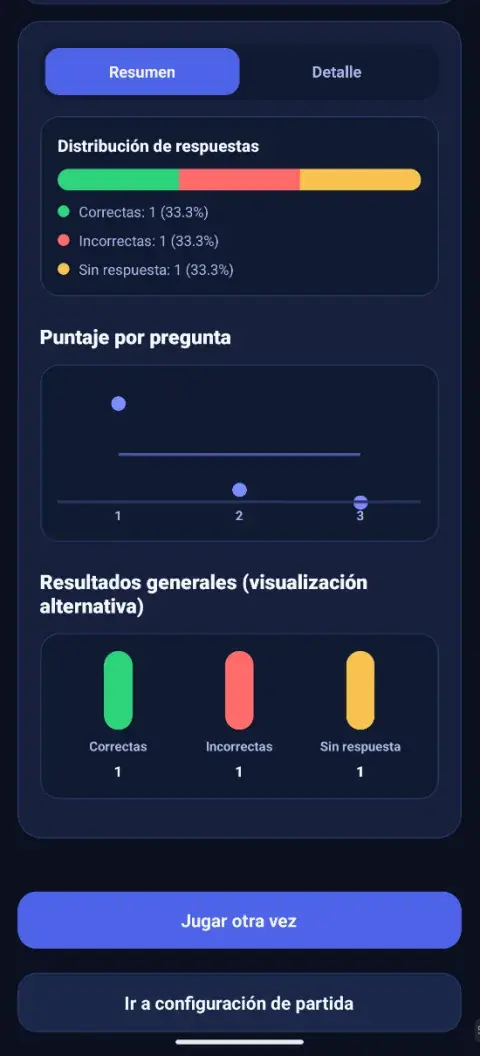
Closing a question coordinates answers, timeouts and game progress. The gameplay screen uses references and timer cleanup, while utilities centralize timing and scoring rules. The summary keeps individual answers to explain the result.
Classic, True/False and Multiple Choice provide configurable games with Time Attack or dynamic difficulty. Profiles retain local history and rankings; game summaries and statistics show answers, points and result distributions. No backend or remote authentication is required.