Practice without changing rankings
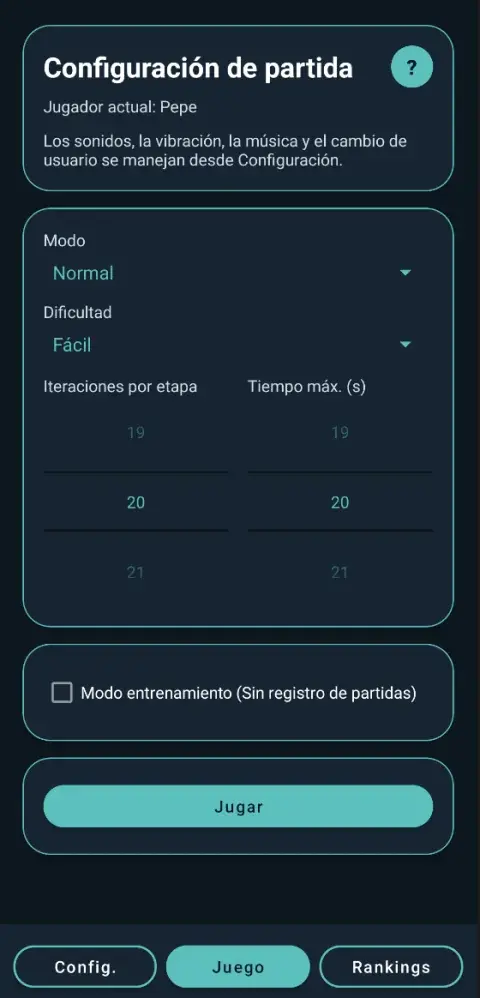
The completion path checks training mode before saving the game. Hints, optional time limits and life settings support practice without adding its results to rankings or statistics.
Attention under pressure.
Respond to changing stimuli under attention and timing rules.
Java Android game with normal, inverse and dynamic modes; color, number and word stimuli, configurable difficulty and cumulative on-device statistics.
Make each challenge’s rule explicit and measure responses without mixing practice sessions with local competitive results.
I developed the native game, screens and rules, stimulus configuration, result storage, and local ranking and statistics views.
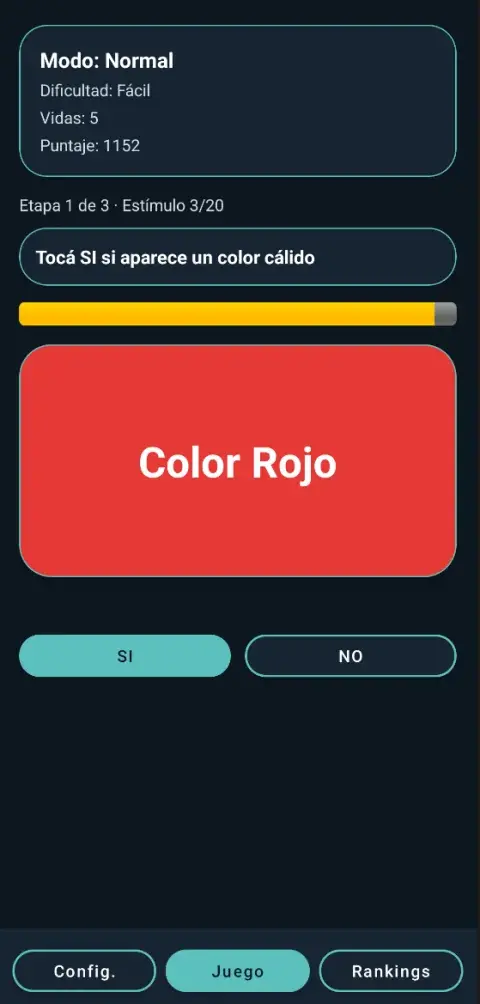
Activities and XML layouts form the interface. Configuration models, RuleFactory and StimulusFactory build stages and stimuli; GameActivity coordinates timers and answers. AppDbHelper stores games and statistics in SQLite, and SharedPreferences retains settings.
The completion path checks training mode before saving the game. Hints, optional time limits and life settings support practice without adding its results to rankings or statistics.
Factories generate rules and stimuli from mode and difficulty. SQLite keeps queryable results, while sound, vibration and music settings remain in SharedPreferences.
Modes change the expected answer and available time. Stage planning organizes that variation; GameActivity measures reactions with Android’s monotonic clock and coordinates feedback, progress and game completion.
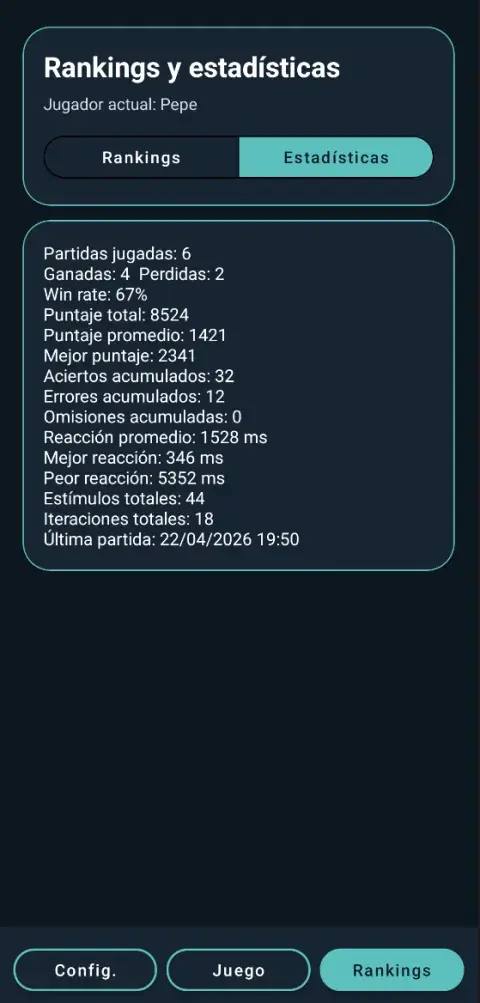
Modes, difficulty, iterations and training are configurable. Recorded games feed player rankings and statistics in SQLite. Sound, music and haptic settings persist locally; shared rankings aggregate results from the same device.